Northwood Raises $100M Series B to Accelerate Ground Infrastructure Delivery for High-Capability Space Missions

Northwood Raises $100M Series B to Accelerate Ground Infrastructure Delivery for High-Capability Space Missions
Today, Northwood announced that we have raised $100 million in Series B funding to support a new generation of high-capability space missions that need to operate on increasingly tight timelines. The financing follows millions in signed contracts, including a $49.8 million contract with the Space Force and the deployment of Northwood’s early network. The round is led by Washington Harbour Partners, co-led by Andreesen Horowitz, and includes participation from Alpine Space Ventures, Founders Fund, Stepstone, Balerion, Fulcrum, Pax, 137 Ventures, and others.
By vertically integrating the ground infrastructure stack, Northwood is rethinking how quickly missions can move from concept to live operations.
Why this matters now:
Our appetite for space has never been stronger.
Across government and commercial sectors, space investment is accelerating rapidly. The U.S. Government alone has spent over $11B on a single ground system to support a few hundred satellites, even as the next wave of missions is poised to deploy additional hundreds to thousands of satellites across multiple orbits. At the same time, a growing number of commercial builders are pursuing ambitious new architectures across communications, manufacturing, energy and more, each with unique networking and operational demands.
But while there are many concepts to push the boundaries of space, we are not moving fast enough from concept to fully realized missions.
Perhaps unintuitively, one of the biggest obstacles to executing advanced space missions takes place on the ground. For years, the growth in space-side capabilities has outpaced the underlying ground infrastructure that supports it. It has reached the point where securing ground connectivity often takes longer than building and launching the spacecraft themselves.
The problem:
Ground is really hard, and no one has been accountable to fix it.
Getting data to and from space is a multidisciplinary problem where physics, timing, software, networking, hardware, global operations, regulatory approvals, and security all collide at once. Most treat it as disconnected components and decisions; companies either build it themselves or cobble together parts and solutions from multiple vendors. The result is vendor sprawl, manual orchestration, hidden integration costs, and systems that break over time or when network demands change.
The compounding consequence is that satellite operators end up running two businesses: the constellation or capability they wanted to build, and the ground infrastructure business they have to build to make it work. That steals time and capability from the space mission.
Northwood’s approach:
We help space builders go further faster.
Northwood is an end-to-end ground infrastructure provider – from initial concept through deployment to live data delivery. By vertically integrating the entire ground stack, we can collapse what used to take years into months, and what took months into days. Our vision is building towards a ground infrastructure layer that works like cloud computing, where global capacity and routing scales on demand without the usual procurement cycles, vendor coordination, or integration challenges.
Further: Capability
- We are designed to support diverse missions that push the boundaries of how humanity relates to space. In the same way cloud infrastructure was built to support an explosion of radically different applications, we believe space networking must enable the same kind of diversity. We design for this at every layer: how we craft solutions with spacecraft operators, how we design our hardware, and how we deploy and operate our network.
Faster: Accountability
- We are accountable for bringing links to spacecraft online and keeping them running, from end to end. We believe that vertical integration is how we can align ourselves best with this outcome. All parts of our stack have been designed to accelerate time to operations and to provide visibility into the network to drive reliability.
What have we done so far:
Less than 2 years since our company was announced, Northwood has been trusted to solve some of the hardest problems in ground infrastructure. Northwood has been awarded a $49.8 million contract by the US Space Force (USSF) to support the Satellite Control Network (SCN). This is the critical infrastructure used for launches and early satellite operations, to track and control satellites, and to provide emergency support to tumbling and lost satellites.
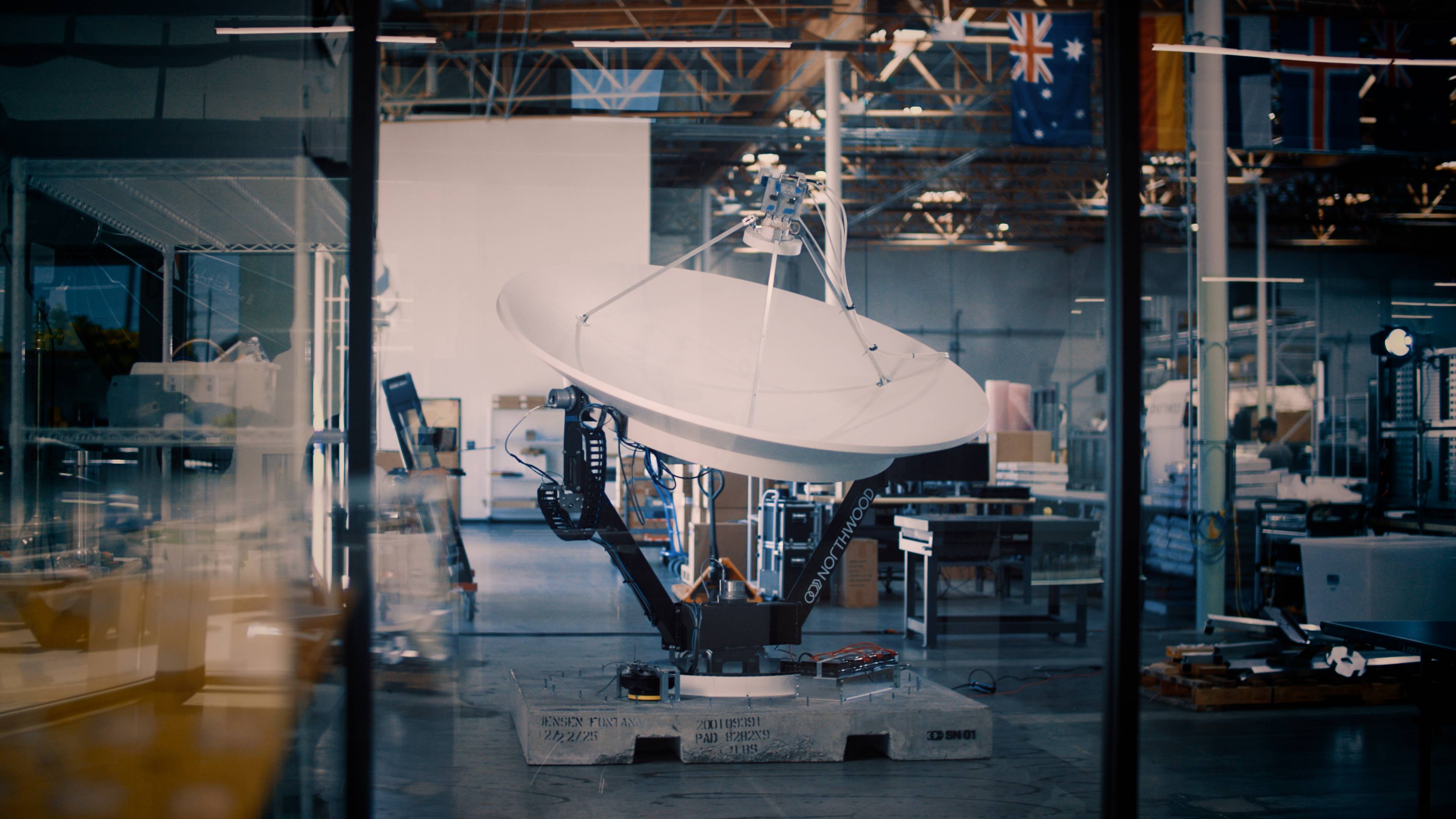
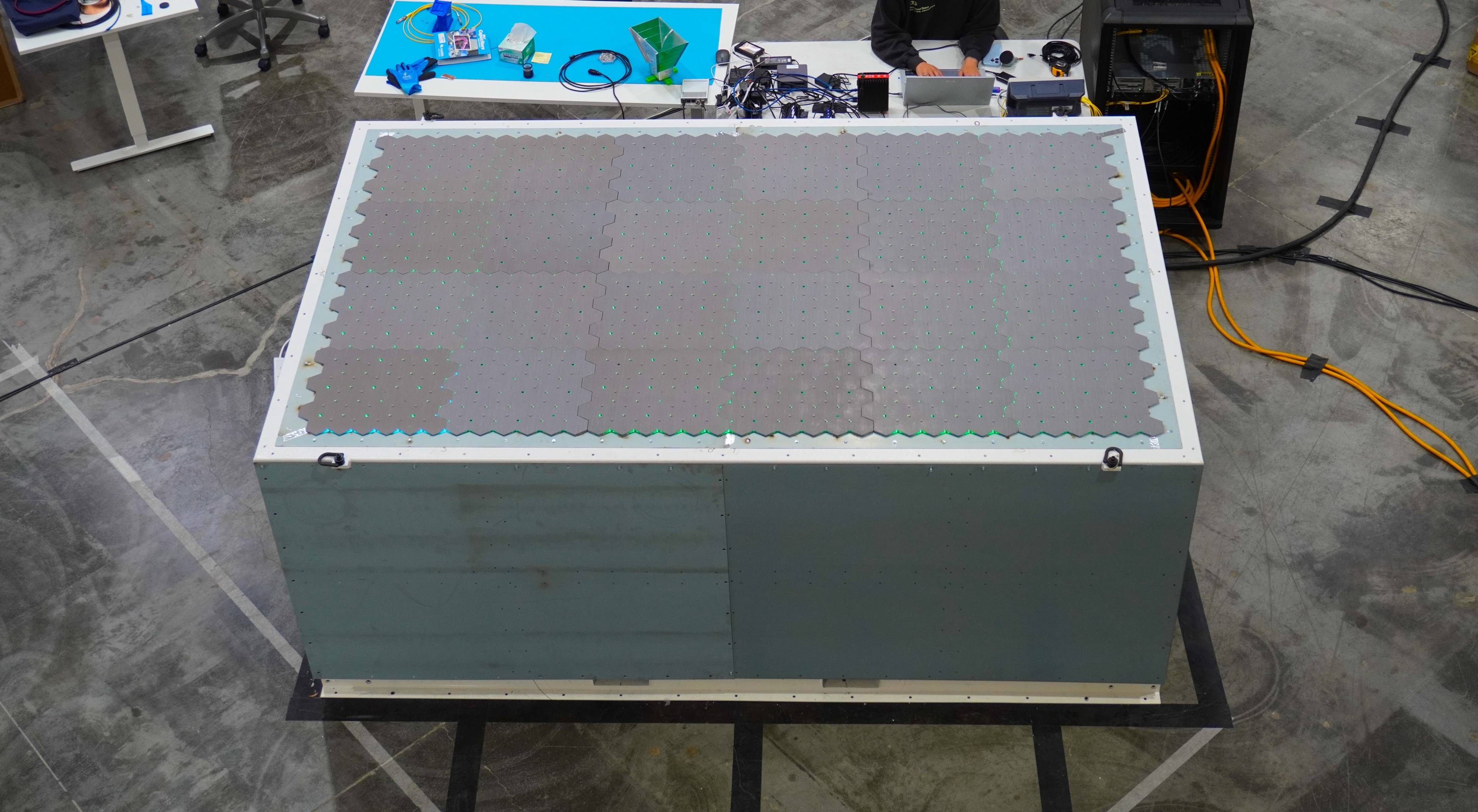
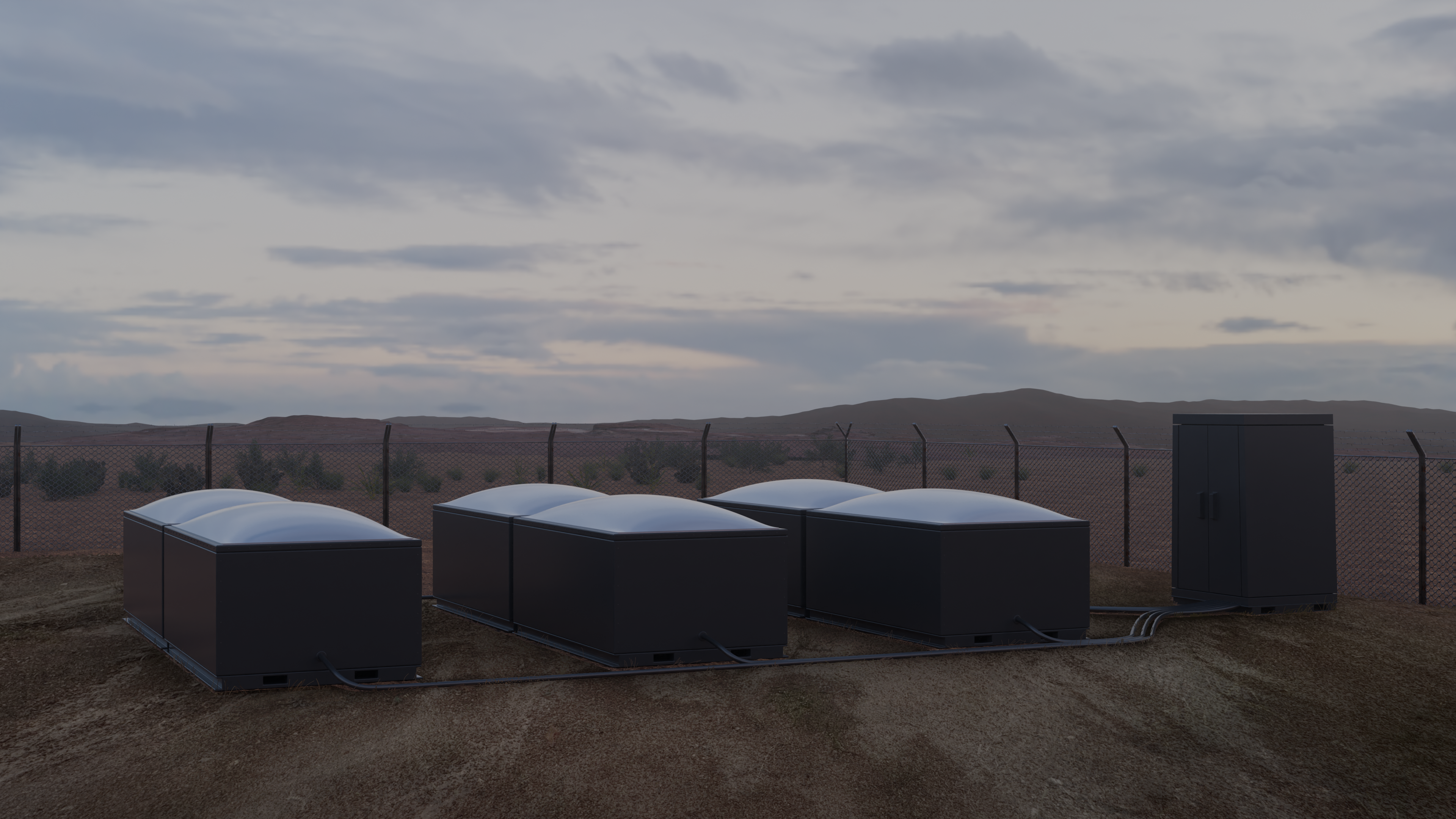
At the core of this work is an integrated approach to ground systems. Northwood has built a multi-beam phased array system, called Portal, which is designed to add capacity for functions like those needed by the SCN and other commercial missions.
The novel challenge in building Portal was enabling multiple simultaneous transmitting and receiving connections not just in one orbit, but across many. Portal supports connections across low Earth orbit (LEO), medium Earth orbit (MEO), and geostationary orbit (GEO). Unlike fixed-aperture systems, Northwood’s phased arrays electronically steer multiple beams in real time, enabling precise tracking and handovers without mechanical movement. These design features enable dynamic movement of spacecraft across orbits, a capability that is currently very costly and can take upwards of two years to deploy each ground antenna.
Northwood has already hit several technical milestones against this effort and to support our broader offering:
- In October 2024, eight months after the company was announced, the first iteration of the product successfully ran Telemetry, Tracking, and Command (TT&C) operations with commercial space company, Planet Labs.
- In June of 2025, Northwood demonstrated that a second, higher power, iteration of Portal can deliver 1 kilowatt (1kW) of transmit power and receive sub-picowatt signals within the same face. These faces can be arrayed in modular configurations to support higher power levels such as 6- or 8-array configurations supporting 6- or 8-kW power to GEO at site. This feat made Portal the highest power commercial communications phased array ever built.
- In December of 2025, we hit the production volume of 8 Portal units produced in a single month. Within 4 weeks we built and tested 8 full arrays composed of 256 different PCBAs and hundreds of subcomponents.
- As of January 2026, Northwood has deployed operational Portal units across two continents. At the latest site, all arrays were installed and powered in 12 hours and began live contacts the next day. As a result, Northwood’s Portal system was built, shipped, installed, and taking satellite passes in the same time it typically takes other antenna systems that are already built and shipped to just install.
- While developing advanced antenna systems, Northwood simultaneously built the complete service backbone and operational capabilities needed to run its network. Northwood’s core network spans a broad technology stack: distributed cloud infrastructure and event orchestration, custom narrowband and wideband modem products, networking backbone, telemetry systems, and software interfaces, that allow customers to communicate with their spacecraft. Every single piece of Northwood hardware is accompanied by custom developed firmware and software, allowing Northwood to offer unparalleled insights into the network and its performance.
- On the infrastructure side, Northwood has two sites ready for operations, five sites in build, and an additional eight sites in progress across five continents.
This comprehensive approach enabled a 3-month turnaround time from contract execution with US Space Force to communication links ready for operations. Developing this new capability end-to-end with strong partners like the USSF Program Executive Office for Battle Management, Command, Control, Communications, and Space Intelligence (BMC3I) has been a useful case study of Northwood’s approach. We partner with boundary-pushing space missions to bring them online faster and, along the way, build commercial capabilities that the rest of the industry can benefit from next.
“Northwood provides the only viable approach capable of scaling ground station capacity to match expected satellite proliferation with the pace and security required.” said Mina Faltas, Founder and Chief Investment Officer of Washington Harbour Partners. “For example, the US Government has issued Executive Orders mandating commercial, scalable, solutions deployable at speed and scale and Northwood is the only commercial offering in the market meeting these requirements. Its phased array and digital beamforming technology is uniquely suited to handle high-throughput, multi-orbit operations, and cannot be replicated using legacy dish-based systems. Equally important, Northwood’s vertically integrated manufacturing and deployment model enables sites to be produced, shipped, and installed at a speed and cost structure no other provider can achieve. Together, these capabilities make Northwood the only solution capable of expanding ground station infrastructure fast enough to support the next generation of U.S. space architectures.”
“Northwood is entrusted with missions where failure isn’t an option and scale is non-negotiable.” Says Katherine Boyle, General Partner at Andreesen Horowitz. “The team brings rare technical depth across hardware, software, and national security programs, and they’ve translated that heritage into operational systems supporting real missions today. With this Series B, we’re doubling down on our conviction that Northwood has both the long-term backing and the execution discipline to become the ground infrastructure partner that the most serious missions are built around.”
"We co-led Northwood's Series A because we saw a team that understood the critical bottleneck holding back the space industry." Says Bulent Altan, Founding Partner at Alpine Space Ventures. "Since then, their execution has been exceptional—delivering operational capability in months, not years. The LEO economy is booming and driving unprecedented demand for ground infrastructure, but Northwood's vision extends beyond any single orbit. Their multi-orbit approach, from LEO through MEO to GEO, reflects what the industry actually needs: a ground layer that can scale with the full diversity of space missions being deployed today. That's the kind of foundational infrastructure that unlocks the next generation of capabilities across the entire space ecosystem."
With $100M of new capital less than a year after our $30M Series A, funds will support both direct investment in Northwood’s operational infrastructure for scaled production as well as the expansion of capabilities to support emerging mission sets. By the end of 2026, Northwood will have capacity to consistently produce over a dozen arrays per month for its Portal product, in addition to production volumes on yet-to-be announced additional ground products. Northwood is targeting the deployment of over 82 beams ready for operations by the end of year across 18 global ground sites. Scaling up is critical to fulfill demand we're seeing in key areas of growth in the space industry enabling high power, dynamic beams for space operations, high throughput, low latency links for satellite communications constellations, and rapidly deployable antennas for proliferated space sensing.
Northwood Demonstrates Operational Capability of Highest Power Commercial Communications Phased Array

Northwood Demonstrates Operational Capability of Highest Power Commercial Communications Phased Array
Northwood, the CA-based startup building a ground network that provides dynamic and resilient connectivity at scale for space operators, just hit a new technical milestone ahead of its first deployment later this year.
Northwood announces today that it has tested its first production-ready phased array antenna system, Portal. Designed for supporting satellites in low earth orbit (LEO), medium earth orbit (MEO), and geostationary orbit (GEO), Portal has demonstrated that it can deliver 1 kilowatt (1kW) of transmit power and receive sub-picowatt signals within the same face. These faces can be arrayed in modular configurations to support higher power levels such as 6- or 8-array configurations supporting 6- or 8-kW power to GEO at site.
Northwood’s emphasis on rapid and scalable production has informed the design of this system. Portal sites are changing the game on time from production to delivery of operational high power phased array units. This system was integrated at Northwood’s manufacturing facility in just 5 days. Portal production sites are designed to be manufactured, installed, and operational in a matter of weeks.
Northwood plans for customers to be able to leverage the Portal system to maneuver in and between orbits. As a phased array system, Portal can support this dynamic activity not just for one satellite, but for many. This is particularly important given the exponential growth in satellites in space that is overwhelming existing ground networks.
“Portal is an exciting proof point for how Northwood can introduce critical capabilities to our ground network at a fraction of the cost and schedule of traditional standards,” said Bridgit Mendler, CEO of Northwood. "This means that systems aren’t just deployed to the network rapidly the first time, but they can also be quickly replaced and reconfigured, so customers can stay connected and scale their operations as needed.”
Operating at over 20x higher EIRP (Effective Isotropic Radiated Power), this new phased array iteration represents a generational leap forward from Northwood’s first prototype, Frankie, which made successful contact with a Planet Labs satellite just 9 months ago. This milestone makes the Portal system the most powerful commercial communications phased array ever built.
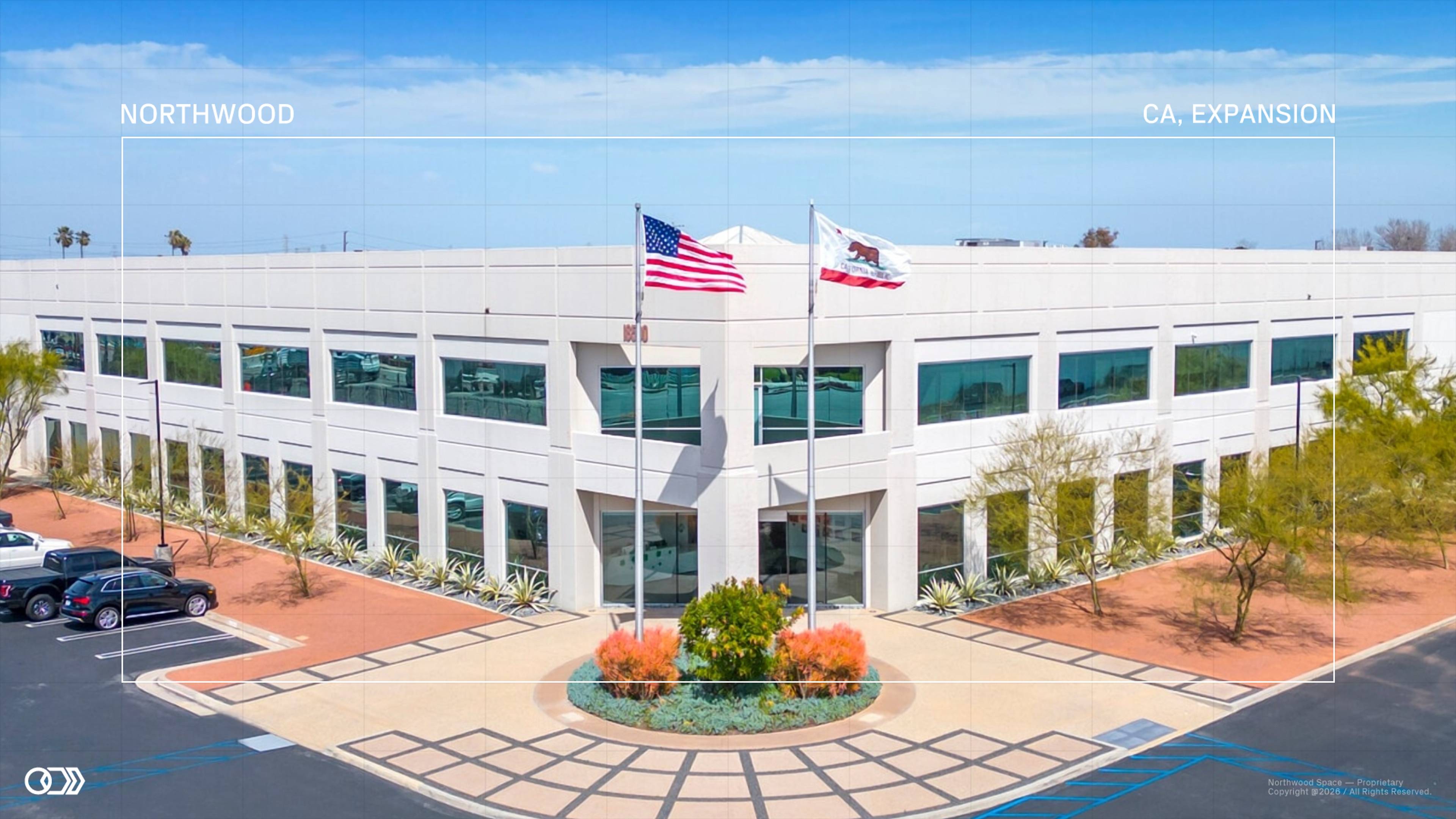
Northwood operates out of a 35,000 sq ft facility in Torrance, California, designed to produce 16 portal arrays per month in addition to other product lines. With multiple sites already underway, Northwood plans for global deployment beginning in Q4 2025.
Northwood announces $30M Series A

Northwood announces $30M Series A
Led by Alpine Space Ventures and a16z, with Also Capital, Founders Fund, and Stepstone joining as major investors, Northwood will use this funding to expand into its 35,000 sqft manufacturing facility and deploy the first operational version of its global network of Northwood ground sites.
Space has never been more important or more underprepared
The space segment is no longer an accessory — it is core infrastructure. It powers everything from GPS and remote asset monitoring to missile warning and global communications. As General Bradley Saltzman, Chief of Space Operations of the US Space Force, recently put it: “We are no longer the icing on the cake – we’re the eggs in the batter.” Space isn’t a distant frontier, we feel its impact in every facet of our lives.
Yet all of these critical applications hang in the balance of limited and fragmented ground networks of over-capacity antennas that are trusted to keep space applications afloat. While dazzling rockets launch satellites that orbit the earth, their effectiveness is reliant upon these antennas on earth to send and receive the data the satellites produce. Without these ground antennas, there would be no space industry. And today’s infrastructure is reaching a breaking point.
Designed for an earlier era driven by science missions, these critical assets are costly, slow to build and deploy, and fragile. Often the outage of one ground site could jeopardize an entire mission, disrupting the essential communication needed to guide satellites and deliver timely data. And today these outages are common, as ground networks are drastically under capacity, leading operators to scale back their ambitions on what they can build, and to overbook, overpay, and over-engineer just to hit basic delivery timelines. Yet we are in a world where space is becoming more significant, not less. It’s time we stop treating satellite connectivity like booking a telescope for a science project and start treating it like what it is: core infrastructure for the 21st century.
Infrastructure for a new era
A reliable ground network deployed at scale is that missing core infrastructure – powerful enough to sustain the space capabilities of today and develop the next wave of capabilities to connect, inform, and protect people on earth.
We have many models for how this can be done. The internet is industrialized infrastructure made up of common networks to reliably route large volumes of data around the globe. We need that for space. We need to make scaling antennas as easy as scaling servers and network switches. And we need to make the network of those antennas as reliable as the internet as well. Running an app doesn’t mean coordinating routers or reserving fiber — the underlying infrastructure is abstracted and pooled across a large shared network that delivers the connectivity you need.
In this same way, a reliable ground network at scale can enable an industrialized space economy – this would give operators of all kinds the power to build with confidence without worrying if the network will scale with them or hold up under pressure. Because when the next wildfire hits, when supply chains are disrupted, when geopolitical events unfold — you can’t afford to ask whether your data will arrive.
Northwood – A new way to build
Northwood is building a new kind of network from the ground up. We are innovating on antenna hardware developed in-house and designed for cost efficiency and manufacturability. Our vertically integrated development enables us to rapidly iterate on new products and take advantage of price and timeline efficiencies – we plan to hit a rate of 2 sites deployed per month in our new facility with system costs at 10x less than comparable efforts.
We are aiming to build the largest shared network in throughput and link capacity. Our sites will be outfitted with the ability to scale up to 100 gbps backhaul and we are aiming to deploy multilink sites covering 6 continents by the end of 2026. This enables surge capacity, redundancy, and global reach that modern missions require.
And finally, we are building a software layer that abstracts the ground into a programmable interface to give developers flexibility and control. This opens the door to integrating space-based data movement into the broader digital economy—allowing developers to automate, spin up new services, and move mission data as easily as managing cloud compute resources.
Accelerated Progress
Northwood used its seed round funding to demonstrate the feasibility of a phased array prototype antenna, built on 5x reduced time and 10x reduced budget compared to similar prior efforts. We designed, built, deployed, and operated this system in four months, ultimately performing nominal operations with Planet Labs.
We have appreciated the opportunity to work in partnership with DARPA, Space Development Agency, and the Department of the Air Force as we continue our development work.
Today, Northwood is excited to announce a $30M Series A fundraise led by Alpine Space Ventures and Andreesen Horowitz with major investors in Founders Fund, Also Capital, and Stepstone and participation from Box Group, Balerion, Banter Capital and Humba Ventures. This funding will be used to scale production and deploy the first operational Northwood ground network, moving us one step closer towards a new industrialized space infrastructure for the 21st century. This will move us one step closer towards industrialized space infrastructure that scales as fast as the missions it supports.
Our first phased array ground station is up and running — in record time

The bottleneck for space is here on Earth.
Over the last decade, we’ve watched as the space industry has expanded dramatically, while our critical ground infrastructure has not kept pace. Ground stations today were designed for a different era, where it was acceptable for connectivity to be sparse and unreliable, or for companies and organizations to devote enormous resources to build their own capabilities. As space applications mature and expand, we need to set a new baseline that expects always-on satellite connectivity for a large, robust, and industrialized space economy.
Our mission is to serve Earth by industrializing space. To deliver on this mission, we are building the most efficient solution for reaching always-on satellite connectivity. Northwood is building the first shared network of phased array ground stations — like cell towers, for satellites.
Today I am proud to share that we have achieved the first major milestone towards this mission.
Rethinking satellite communications capacity from the ground up
We’ve spent the last four months designing, building, and testing a new kind of all-digital phased array antenna for commercial ground station service — and as of this week, we know it works.
A few days ago, Northwood achieved a major milestone by completing the first-ever live sky test of our phased array antenna. We successfully connected to the satellites of our partner Planet Labs, a leading provider of data about Earth, with hundreds of satellites imaging the planet every day. Our multi-beam system achieved bidirectional communications links over the full duration of a pass, running nominal operations for Planet. Unlike traditional parabolic antennas, which are limited to tracking one satellite, our phased array can seamlessly connect with multiple satellites at the same time. The digital nature of our system also removes mechanical wear-and-tear and single points of failure in the RF chain that are present in parabolic systems. The implications for satellite operators are substantial — unprecedented spacecraft access, reliable communications for critical missions, and new dynamic capabilities.
In the past four months we have designed, built, and tested our phased array system. Similar examples of phased array projects have taken years to develop. Thanks to the unique combination of expertise on our engineering team, we were able to challenge this timeline. Every aspect of this antenna, from the beamforming software to the custom electronics, was designed in-house to optimize for efficiency. This will continue to be a critical aspect of Northwood’s manufacturing approach as we set out to replicate our phased array systems, called Portals, at new site deployments beginning in 2025.
Deployment similarly introduced a new standard of speed. From the moment the antenna arrived in North Dakota, it took less than six hours to deploy and begin live testing. This is a contrast to traditional parabolic antennas, which often require large concrete foundations and weeks of preparation. The ability to deploy quickly means greater ground responsiveness, resilience, and access to satellite communications, opening up opportunities to connect more spacecraft and deliver the critical data that impacts life on Earth.
Our live sky milestone validates both the technical capability and rate of deployment that will unlock the ability to rapidly scale a global ground network. This moment is all thanks to Northwood’s world-class engineers across every function that have devoted many long nights and applied their tremendous talent to make this work possible!
And this step is the first of many. Looking ahead, we are preparing for the deployment of Northwood Portals across strategic locations around the world starting in 2025.
If you’d like to learn more or get involved, visit our careers page or contact us at contact@northwoodspace.io